

The battery cell is the core component of the energy storage system, and its performance and safety directly determine the stability of the entire system. Inside the battery cell, chemical reactions may cause a sharp increase in temperature and pressure, which can lead to thermal runaway and subsequently evolve into fires or even explosions.
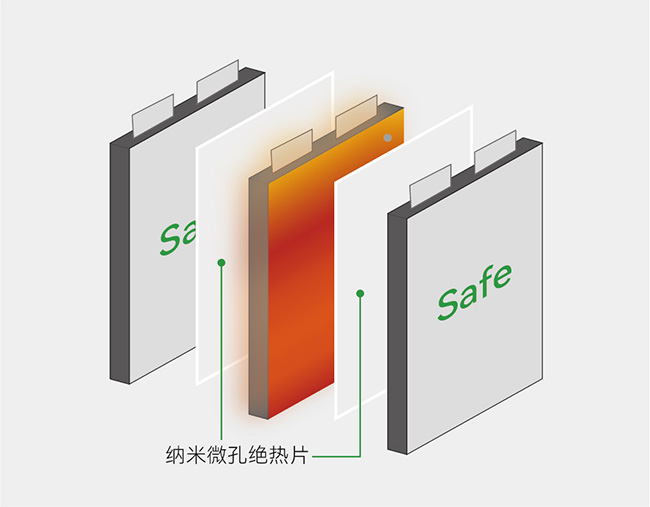
The nano-microporous insulation sheet, with its extremely low thermal conductivity (800℃ < 0.04 W/m·K) and excellent high-temperature resistance, performs exceptionally well in the protection against thermal runaway at the cell level, outperforming aerogels and other traditional insulation materials.
It not only effectively blocks the heat conduction and diffusion between the battery cells, but also has excellent mechanical strength and dimensional stability, thus ensuring the long-term consistency of the heat insulation performance.
In the event of a fire, the nano-microporous insulation material not only boasts excellent heat insulation properties but also does not release smoke or produce pungent odors. It provides safe and environmentally friendly protection. When it is applied between energy storage cells, if a cell experiences thermal runaway, the insulation material can effectively prevent the spread of heat, keeping the temperatures of adjacent cells within safe limits. This allows the system to gain more time for early warning and emergency handling, significantly enhancing overall safety.
02 Pack-level structural optimization, further enhancing structural safety
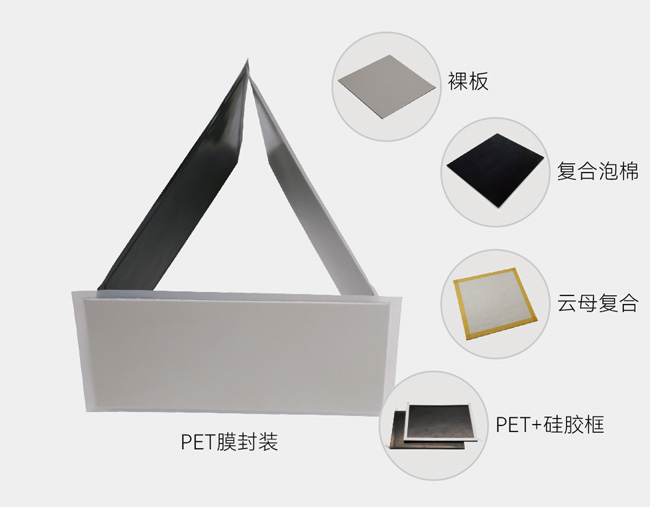
At the Pack level, multiple battery cells are integrated to form a complete energy storage module. Thermal management and fire prevention design are of utmost importance. At this stage, not only the heat conduction between the battery cells needs to be addressed, but also the impact of the external environment on the system needs to be considered.
Nano microporous insulation sheets can be used as the insulation layer between battery modules, effectively reducing heat transfer efficiency and preventing chain reactions caused by local overheating. The material is ease of processing and flexibility in customization enable it to adapt to the complex structural design of the Pack, thereby enhancing the overall safety and service life of the system.
Meanwhile, a nano fireproof and heat insulation barrier is added outside the Pack, which can limit the risk to a smaller area in case of a fire, providing a double layer of protection.
When the energy storage system is deployed in the form of containers, the risks involved become more complex. Inside the containers, multiple battery groups are usually integrated. In case of a thermal runaway, the consequences would be extremely serious. Therefore, setting up fireproof and heat-insulating layers within the prefabricated compartments of the energy storage containers can effectively prevent the fire from spreading to other units in the event of a fire in a single container.
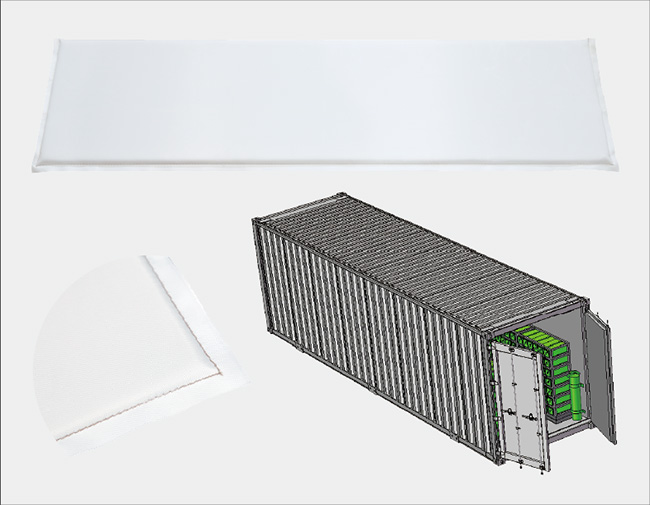
The application of nano-microporous insulation boards in containers mainly lies in the following two aspects:
Heat insulation protection: Nanometer-sized microporous insulation boards are installed inside the container. Their excellent heat insulation properties can significantly reduce the temperature of the cold surface of the equipment.
Fire isolation: The nano-micro-pore heat insulation board has UL94 V-0 level flame retardancy and a high temperature resistance. As a fire barrier, it effectively prevents the spread of fire and provides valuable time for emergency handling.
Furthermore, the lightweight nature of the nano-microporous insulation panels not only helps to reduce the weight of the container, but also enhances the efficiency of transportation and installation.
From the cell level to the container level, the nano-microporous insulation board, with its outstanding fireproof and heat insulation properties, provides comprehensive protection for the safe operation of the energy storage system.